Migration has been an essential part of human life. In Namsai, the Tai Khamti community makes it evident because their roots are spread far across Southeast Asia. Belonging to the larger Tai race, a cultural and linguistic group that stretches across regions of present-day Thailand, Laos, Myanmar and parts of Northeast India, the Khamti people carry with them traditions that transcend borders.
The Tai Race and the Khamti Identity
The Tai race is not confined to a single nation. Instead, it represents a shared heritage rooted in Theravada Buddhism, language similarities and cultural practices that have evolved over centuries. Communities like the Tai Khamti in Arunachal Pradesh are part of this broader identity, preserving rituals that echo those found in Thailand and Laos.

The Khamti people, who primarily reside in Namsai district, are known for their deep spiritual connection, monastic traditions and vibrant festivals. Their lives revolve around the teachings of Buddhism, and this influence is clearly reflected in their celebrations, architecture and everyday practices.
Among their many festivals, the most prominent ones include Sangken, the water festival that marks the Tai New Year, and Poi Pee Mau Tai, another significant celebration rooted in renewal and spiritual cleansing.
Sangken and Songkran: A Cultural Continuum
The festival of Sangken celebrated by the Tai Khamti closely resembles Songkran in Thailand. Both festivals mark the traditional New Year and are centered around the symbolic act of water.
During Sangken, people gently pour water on Buddha idols, monks and elders, signifying purification and the washing away of sins. In Thailand’s Songkran, this ritual has evolved into large-scale water celebrations, but the essence remains the same: renewal, respect and community bonding.
This similarity is a powerful reminder of the shared ancestry of the Tai communities. Despite geographical distances, their cultural threads remain tightly woven.
What is Poi Pee Mau Tai Festival?
Poi Pee Mau Tai is the traditional New Year festival of the Tai Khamti community, celebrated with devotion, joy and a strong sense of cultural pride. The term itself translates to “New Year of the Tai people,” marking a time of transition, reflection and renewal.

The festival is deeply spiritual. It begins with visits to monasteries, where devotees offer prayers, light lamps and seek blessings from monks. Rituals often include bathing Buddha statues, an act symbolizing purification and the washing away of negativity from the past year.
How to Attend Poi Pee Mau Tai Festival
I was planning for an Arunachal Pradesh trip for a while and finally got time to visit in November. Coincidentally, I was traveling to the easternmost part of India in Walong and ended up in Namsai as it is a natural stopover on this route.
After coming here, while planning my stay, I learned about the Poi Pee Mau Tai festival. What started as a transit halt quickly turned into one of the most culturally immersive experiences of my journey.
I reached out to the local organizers to understand if visitors could attend the celebrations. The response was warm and welcoming. Not only did they share details about the schedule and rituals, but they also extended support by offering me a media pass, which allowed me to witness the festival more closely and respectfully.
Planning Your Visit
Attending Poi Pee Mau Tai is less about booking a ticket and more about being present in the right place at the right time. Since Namsai is a small town, information about festivals often circulates locally rather than online. It helps to connect with homestay owners, local monasteries or cultural groups in advance.
If you are already traveling through eastern Arunachal, especially towards Kibithu or Kaho, consider keeping a buffer day in Namsai. This increases your chances of experiencing local festivals like this one.
What I Missed and What You Shouldn’t
One mistake I made was assuming the festival followed a typical daytime schedule. While the dates were announced, I didn’t realise that the New Year celebrations actually peak at midnight, much like how we celebrate New Year’s Eve elsewhere. Because of this, I ended up missing one of the most important moments of the festival.
If you are planning to attend, arrive in Namsai at least a day before the mentioned dates. This gives you enough buffer to understand the schedule, sync with local timings and not miss key rituals or performances.
Festival Venue and Celebrations
The main celebrations take place at a large open ground near Namsai, where a big stage is set up for performances and gatherings. In recent years, there has been a conscious effort to promote the festival and attract more visitors, which means you might also see mainstream performers sharing the stage alongside traditional acts.
During the day, the ground transforms into a lively cultural hub. I got to witness a range of traditional sports and performances that reflect the community’s spirit and heritage. There was bamboo pole climbing, a test of agility and balance, and tug of war that brought together both locals and visitors in a fun, competitive setting.
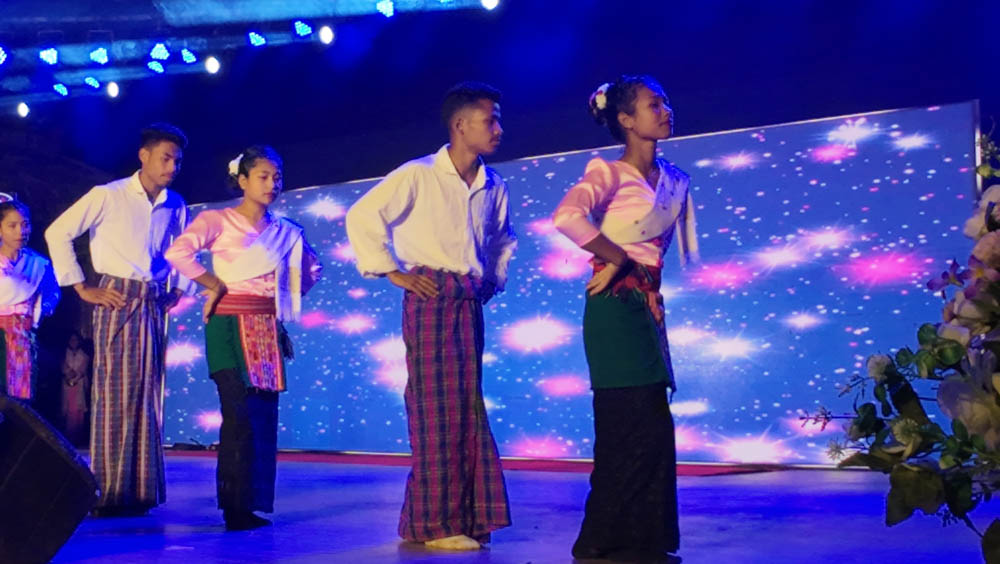
The cultural performances were equally engaging. The chicken dance and deer dance stood out for their storytelling and rhythm, while traditional dances performed by local girls added grace and vibrancy to the atmosphere.
However, the one thing I missed, and would highly recommend you don’t, was the midnight celebration. This is when the fairy dancers perform, creating what many describe as the most magical part of the festival. It’s a reminder that in festivals like Poi Pee Mau Tai, timing is everything, and the most memorable moments often unfold when the clock strikes midnight.
How to Reach Namsai
Reaching Namsai is relatively straightforward if you plan your route in advance. While it may feel remote, it is well connected to key towns in the Northeast.
- From Guwahati: You can take a bus from Guwahati to Namsai or nearby towns like Tinsukia. From there, shared taxis and local transport are easily available. Overnight buses are a convenient option if you want to save time.
- By Air (Itanagar): The nearest airport is Donyi Polo Airport. It is now operational and connects Arunachal Pradesh with major Indian cities. From Itanagar, you can take a bus or hire a taxi to reach Namsai.
- From Dibrugarh: Dibrugarh is one of the most convenient access points. It has good flight connectivity, and from here, Namsai is a comfortable road journey. Shared cabs and buses run frequently on this route.
Where to Stay: A Local Homestay Experience
I stayed at Senhom Homestay, which is conveniently located near the festival ground.

The biggest advantage of staying here was proximity. I could easily walk to the venue, come back for breaks and step out again without worrying about transport.
Responsible Travel in Namsai
Namsai is culturally rich but also deeply rooted in tradition and spirituality. As travelers, how we engage with such places matters.
- Respect local customs: Many rituals are sacred and tied to Buddhist beliefs. Observe quietly and follow cues from locals.
- Ask before clicking: Always seek permission before photographing people, especially monks, elders or during rituals.
- Avoid sensationalising content: Festivals like Poi Pee Mau Tai are not spectacles, they are lived traditions. Represent them with authenticity rather than exaggeration.
Traveling responsibly ensures that places like Namsai continue to welcome visitors while preserving their cultural identity.
Stay updated with my latest trips on my instagram and youtube
Discover more from Daily Passenger Travel Blog
Subscribe to get the latest posts sent to your email.

Leave a Reply
You must be logged in to post a comment.