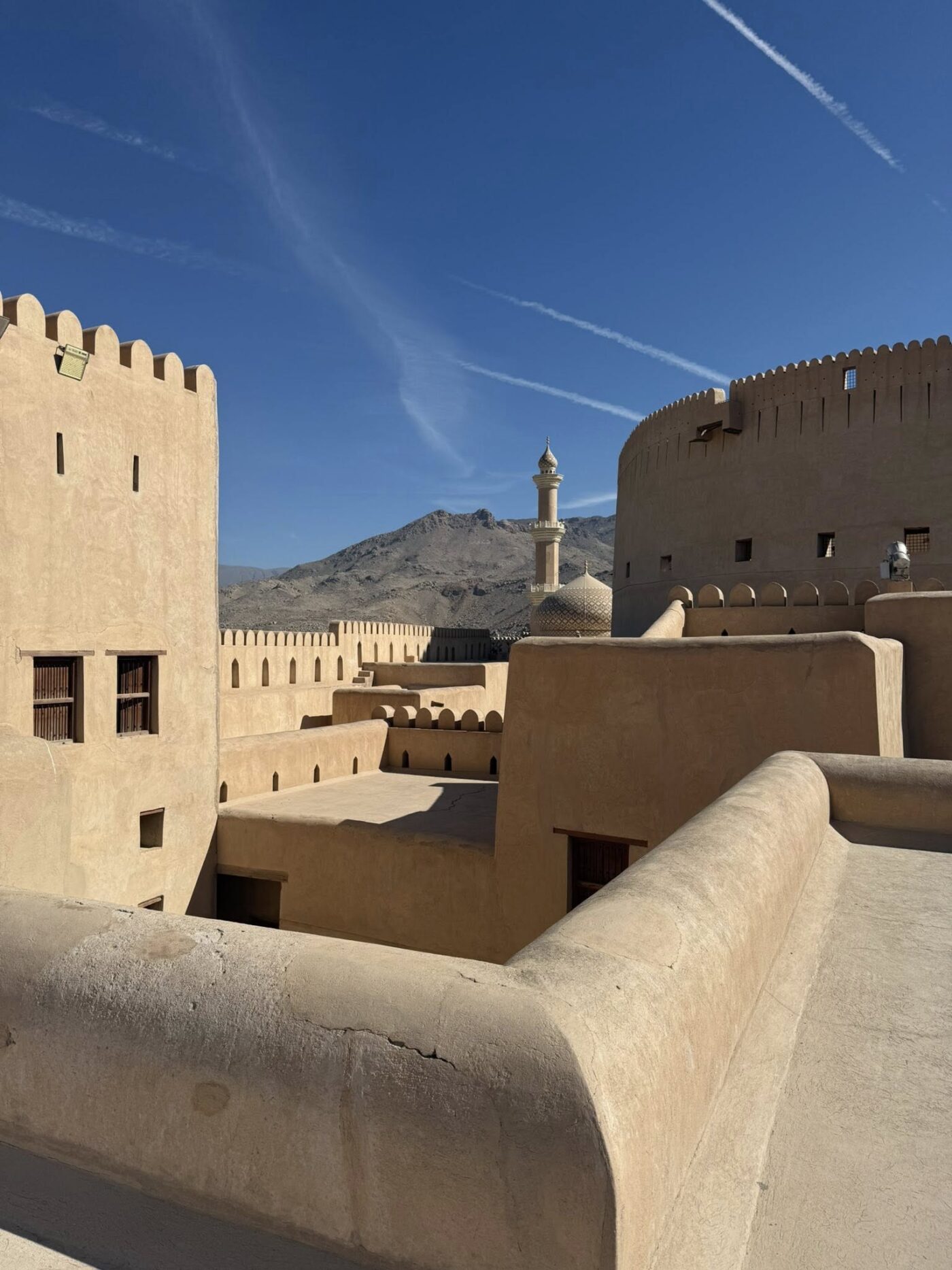
Nestled at the foot of the Hajar Mountains, Nizwa feels like the cultural core of Oman. Once the capital in the 6th and 7th centuries and still a significant religious center, the city carries its history with quiet confidence. Compared to Muscat, Nizwa is more intimate and easier to navigate, with mud-brick buildings, a vibrant souq and a sense of continuity that makes the past feel close.

Oman, meanwhile, seems to be everywhere right now, from Lonely Planet’s Best in Travel lists to social media feeds, and it’s easy to see why. With forts, deserts, mountains, beaches and UNESCO heritage sites, much of it concentrated in the north, the country offers remarkable diversity in a short trip. And at the center of this experience, Nizwa stands out not just as a stop, but as a place to truly understand Oman.
How to Reach Nizwa
Getting to Nizwa is simple, especially if you’re starting from Muscat. The most convenient and budget-friendly option is the public bus service run by Mwasalat.
Buses run regularly between Muscat and Nizwa, and the journey takes around 1.5 to 2 hours. Tickets cost approximately 2 Omani Rial, which I think is pretty expensive for that jorney and distance.
You can book your tickets online using a credit card through the official website: https://mwasalat.om. The process is straightforward, and it’s a good idea to book in advance, especially during weekends or peak travel seasons.
Where to Stay in Nizwa
When choosing where to stay in Nizwa, it really comes down to the kind of experience you want. Broadly, there are two options: staying within the old fort area or staying in the main city.
Stays in the main city are more budget-friendly and easier to access. You’ll find a range of hotels and apartments here, often at lower prices and with better road connectivity. However, what you gain in convenience, you may miss in terms of atmosphere.
Staying inside or around the fort area is a completely different experience. This is where Nizwa’s character truly comes alive, with mud-brick houses, narrow lanes and a sense of history all around you. That said, most of these stays tend to be more expensive, typically starting from around $50 per night.
One important thing to keep in mind is accessibility. Many parts of the old town restrict car entry, and Google Maps can be confusing in this maze-like layout. It’s best to confirm directions with your hotel in advance and understand exactly where you’ll need to park and how to reach the property on foot.
Even within the fort area, there’s a distinction. Stays closer to the outer edge are relatively more affordable and easier to reach, but the deeper you go into the old town, the more immersive the experience becomes, though it often means a longer walk through narrow lanes.
In the end, it’s a trade-off between comfort and character. If you want ease, stay in the city. If you want to feel Nizwa, stay near the fort.
Exploring Nizwa Fort
Walking into Nizwa Fort almost feels like stepping into a bohemian world you’ve only seen in films or imagined in fantasy novels. There’s a certain charm to the way the old town unfolds, textured walls, narrow pathways and corners that invite you to slow down.

For me, it strongly reminded me of Jaisalmer Fort, where life exists within the fort walls. In Nizwa too, the area around the fort is not just a historical site, it’s a living space filled with cafes, small restaurants and places where you can simply sit and take it all in.
There are plenty of souvenir shops scattered across the lanes, along with little spots to explore at your own pace. You can easily spend two days and two nights here, moving between viewpoints, cafés and quiet corners without feeling the need to rush.
In fact, even if you’re backpacking or traveling solo in Oman and decide not to explore beyond Nizwa, you won’t feel like you’re missing out. The fort and its surroundings offer enough depth and atmosphere to make your stay worthwhile on their own.
One thing to note though, souvenirs inside the fort tend to be on the expensive side. If you’re looking to shop, you might find better prices in Muscat.
Top Sightseeing Attractions in and Around Nizwa
Nizwa Fort
Start with Nizwa Fort, the city’s most iconic landmark. The fort and castle complex is easy to explore, with open terraces, narrow passages and sweeping views of the old town and date plantations .
The castle dates back to the 9th century, while the fort was later built as a defensive structure. The highlight is simply walking through the space at your own pace, climbing up to the top and watching the light change over the city.
A rooftop café like Athar Cafe is a great place to pause before or after your visit.
Nizwa Souq
Nizwa Souq is the heart of the city. It feels authentic despite being popular, with a mix of local trade and visitor-friendly shops.

You’ll find silver jewelry, pottery, spices and traditional items like the Omani khanjar. The outdoor section is ideal for souvenirs, while the inner market leans towards food, sweets and everyday goods.
Trying local halwa and fresh juice here is part of the experience.
Goat Market
The goat market offers a raw glimpse into local life. Traders bring livestock into a circular arena where buyers inspect and negotiate in a lively setting.
It’s not staged for visitors, which is what makes it worth seeing.
Places Around Nizwa

If you have extra time, the region around Nizwa is just as rewarding:
- Bahla Fort for a more rugged, less restored fort experience
- Jabreen Castle for detailed interiors and architecture
- Misfat Al Abriyeen for a quiet mountain village setting
- Al Hoota Cave for a guided underground experience
Even without stepping out, Nizwa itself has enough to keep you engaged.
Responsible Travel in Nizwa
Traveling through Nizwa is as much about awareness as it is about exploration. The city is deeply rooted in tradition, and a little mindfulness goes a long way.
- Dress modestly: Nizwa is a conservative town. Covering shoulders and knees is expected, especially around religious and old town areas.
- Ask before photographing: Whether in the souq or on the streets, always take permission before clicking people.
- Be mindful in markets: The souq is a working marketplace, not just a tourist attraction. Respect personal space and ongoing trade.
- Respect cultural spaces: Mosques and certain areas may not be open to non-Muslims. Follow signage and local guidance.
- Avoid over-curation: Not every moment needs to be turned into content. Let experiences stay real rather than staged.
Stay updated with my latest trips on my instagram and youtube
Discover more from Daily Passenger Travel Blog
Subscribe to get the latest posts sent to your email.

Leave a Reply
You must be logged in to post a comment.